
A wedge is similar to a triangle, but both sides slope in the same direction.
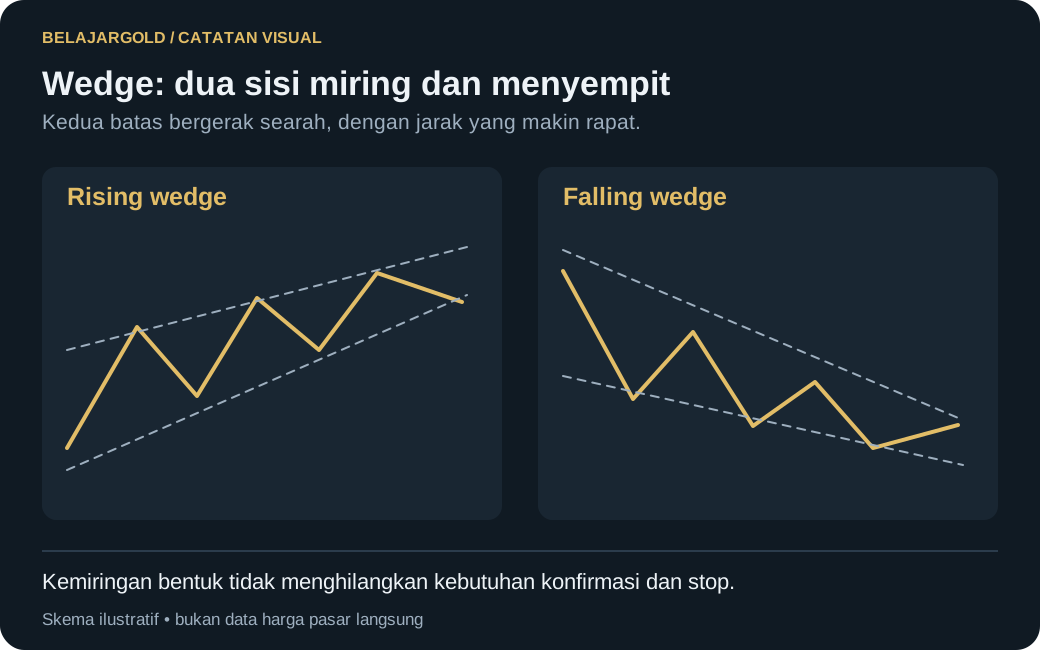
- Rising wedge — both sides rise but narrow. Often bearish (either as a reversal at the end of an uptrend or as a continuation within a downtrend).
- Falling wedge — both sides fall and narrow. Often bullish.
Execution
- Trigger: a close through the side of the wedge opposite to its slope.
- Stop: beyond the last swing inside the wedge.
- Target: the widest height of the wedge from the breakout point; some traders target the start of the wedge.
Key points
- Rising wedges lean bearish, falling wedges lean bullish — but still wait for the breakout.
- Declining volume/momentum during the wedge strengthens the pattern.
Save your learning progress
Sign up free to mark lessons as completed and unlock all member lessons.
Sign Up Free
Risk disclaimer: all content on this site is provided for educational purposes and is not financial advice, signals, an invitation to trade, or a promise of profit. Trading carries a high risk and may result in the loss of part or all of your capital. Check the legality of service providers in your jurisdiction.